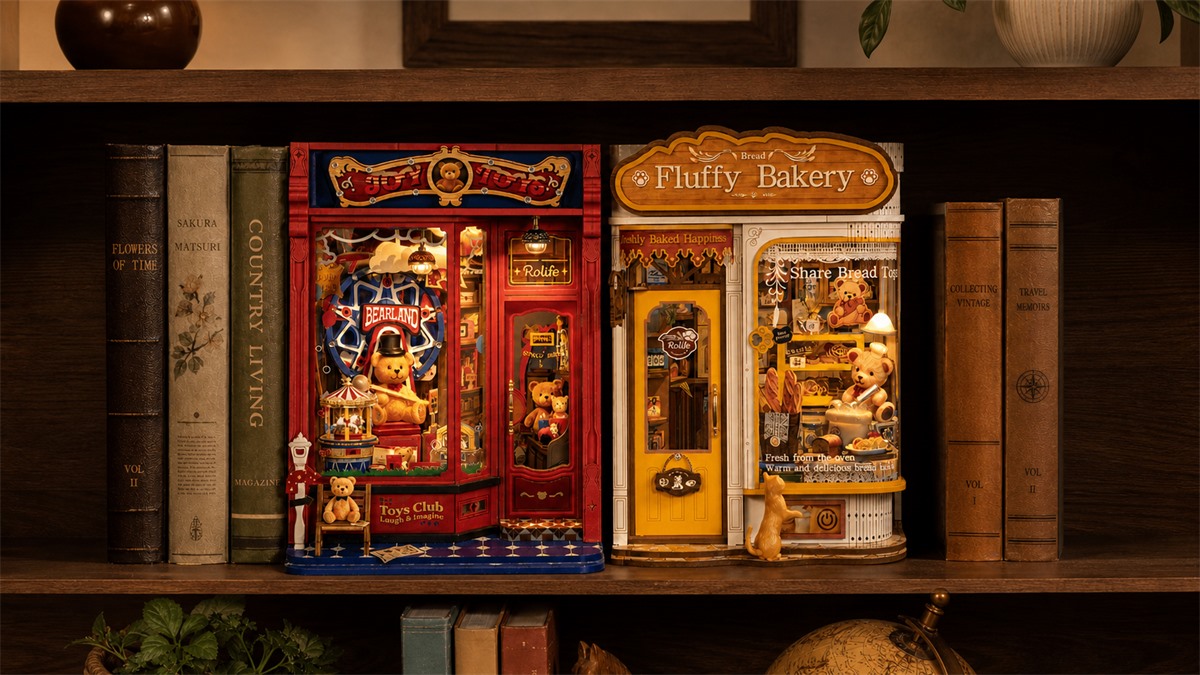
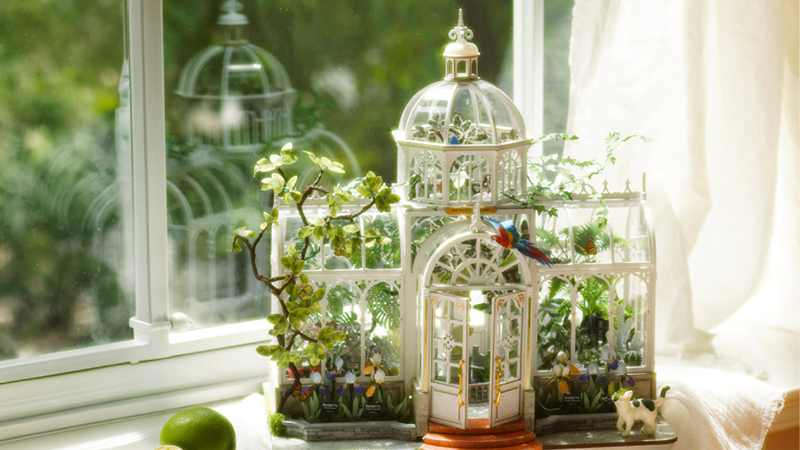
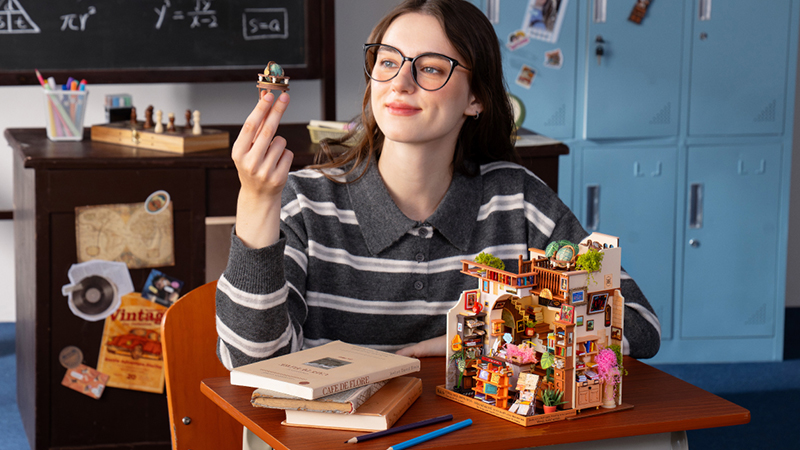
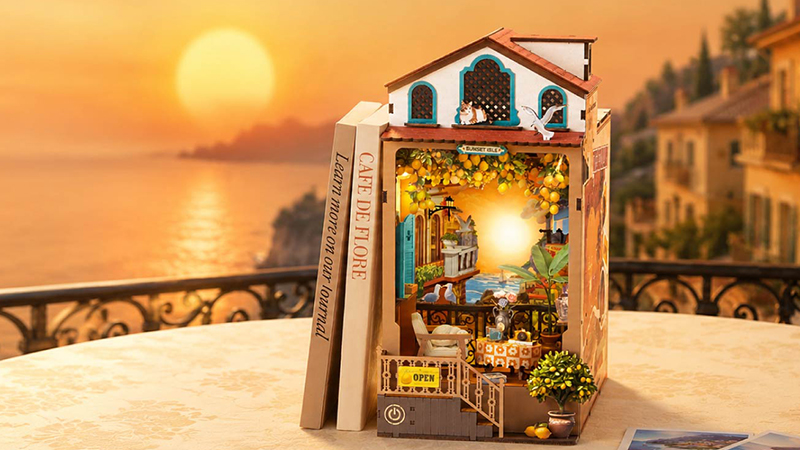


Rolife build time depends on the product line, model, number of pieces, assembly method, and your experience. Across the current DIY product comparison, listed assembly times range from under 30 minutes for compact modular kits to 36 hours for the most detailed traditional miniature house.
What Affects the Build Time of a Rolife Kit?
There is no single build time for all Rolife products because different product lines are designed for different kinds of experiences. Some are short and approachable, while others are more detailed and immersive.
- Product type — modular room kits, wooden puzzles, book nooks, music boxes, jigsaws, and miniature houses use different assembly methods.
- Size and piece count — larger scenes and more pieces often require more assembly time, though piece count is not the only factor.
- Detail level — paper plants, repeated decorations, wiring, and careful alignment can slow a build.
- Material and pre-made parts — injection-molded modular kits often feel faster than traditional miniature builds with more hand-finished details.
- Your pace — first-time builders may take longer, while experienced hobbyists may recognize the building flow more quickly.
- Customization — painting edges, changing wallpaper, or adding weathering can extend the project by choice.
Typical Build Time by Rolife Product Type
A helpful way to estimate build time is to start with the product type rather than expecting one average across the whole brand. The following ranges come from 174 products in the current Rolife full-series DIY comparison table.
| Product type | Listed time range | Practical session style |
|---|---|---|
| Mini Super Creator | Under 30 minutes | One short sitting |
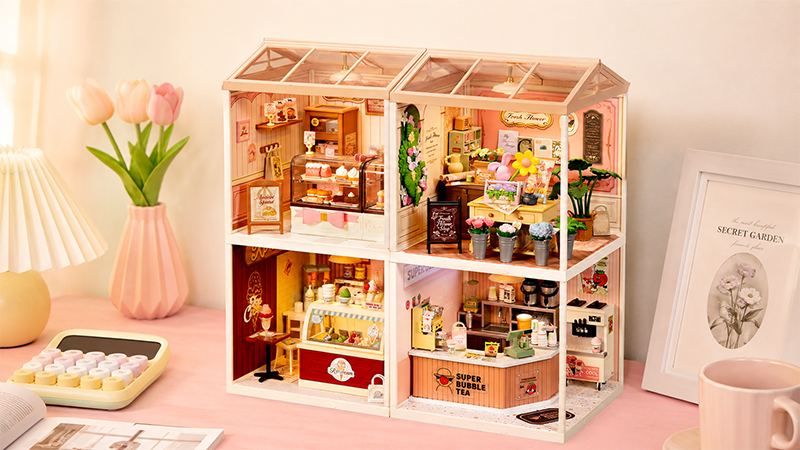
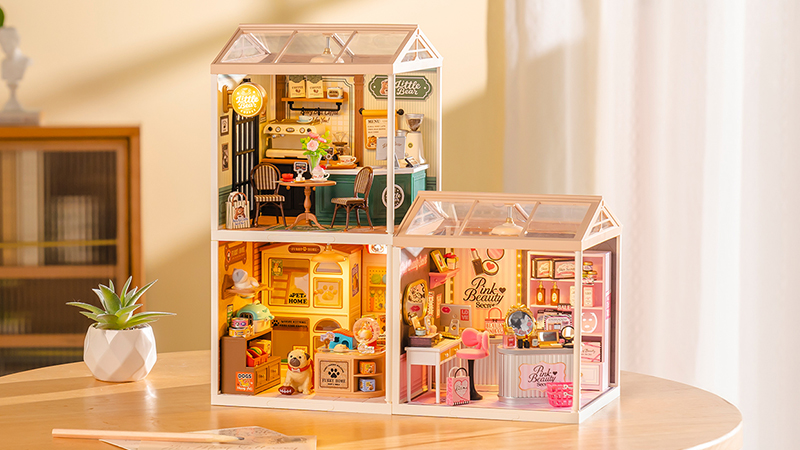
| Super Creator | 45–60 minutes | One evening |
| 3D Wooden Puzzle | 0.5–6 hours | One or several sessions |
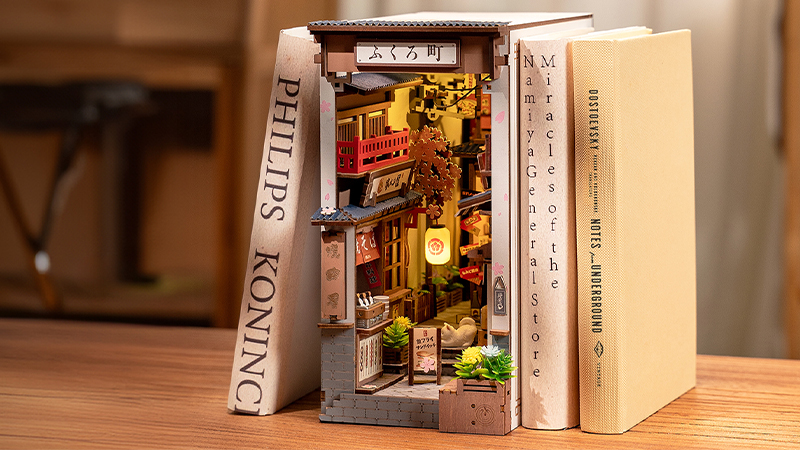
| Book Nook | 2–11 hours | A focused evening or weekend |
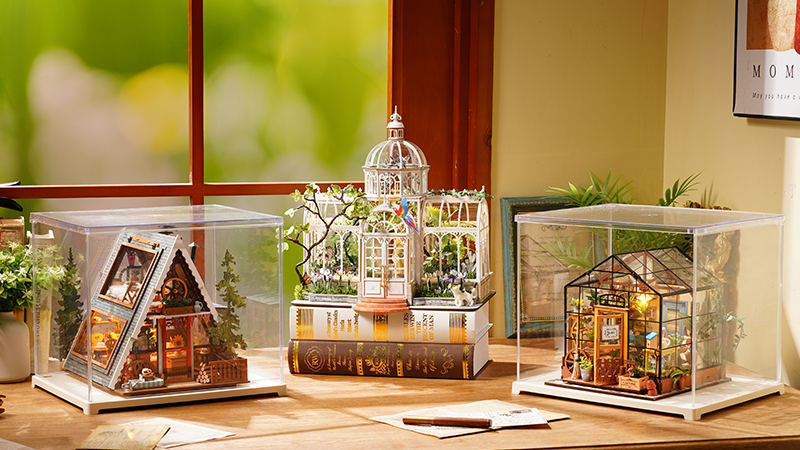
| DIY Miniature House | 1–36 hours | One sitting to a multi-session project |
| DIY Music Box | 1.5–4 hours | One or two sessions |
| Jigsaw Puzzle | 6–10 hours | A longer table project |
Data checked in August 2026. Product-specific information remains the best reference for an individual kit.
Selected Rolife Build-Time Examples
These verified model examples show why a product-type range is more useful than a single brand-wide average.
| Model | Series | Pieces | Difficulty | Listed time |
|---|---|---|---|---|
| Nature Energy Fruits DWS01B | Mini Super Creator | 71 | Beginner | Under 30 min |
| Bubble Bathroom DW014B | Super Creator | 103 | Beginner | 45 min |
| Plutus Cat TG303 | 3D Wooden Puzzle | 72 | Beginner | 0.5 hour |
| Sakura Tree House TGS04 | 3D Wooden Puzzle | 535 | Advanced | 5 hours |
| Century Train TGE01 | Book Nook | 313 | Beginner | 2 hours |
| Wisdom Stationery Shop TGB19 | Book Nook | 472 | Advanced | 8 hours |
| Nostalgic Corner Shop TGE05 | Book Nook | 225 | Advanced | 11 hours |
| Cocoa Shop DS042 | DIY Miniature House | 87 | Beginner | 1 hour |
| Baking Kitchen DG172 | DIY Miniature House | 359 | Advanced | 6 hours |
| Oxygen Oasis DH102 | DIY Miniature House | 1,168 | Advanced | 36 hours |
| Ferris Wheel TGN01 | DIY Music Box | 232 | Beginner | 1.5 hours |
| Sakura Dreamy Tour AMT02 | DIY Music Box | 283 | Intermediate | 4 hours |
| Doggie Art Gallery PT008 | Jigsaw Puzzle | 1,000 | Advanced | 6 hours |
| Welcome to Covent Garden PT006 | Jigsaw Puzzle | 1,000 | Advanced | 10 hours |
Hands-On Time and Calendar Time Are Not the Same
A project described as a four-hour build does not have to occupy one four-hour block. Many builders split a kit across evenings or weekends. The hands-on total may stay similar, while the project remains on the desk for days or weeks.
Elapsed time can also include breaks for glue to set, sorting parts, rereading instructions, correcting alignment, or deciding how to customize a scene. When you compare build times, ask whether the number describes active assembly or the full period from opening the box to finishing the display.
Do Beginners Usually Take Longer?
Yes, that is normal. First-time builders usually spend more time learning the symbols, checking part orientation, sorting parts, and deciding how much force or glue to use. A second or third project in the same product line may feel faster because the assembly logic is already familiar.
A slower first build does not necessarily mean the kit is too difficult. However, if tiny paper details, glue, or repeated corrections are the part you dislike most, a product line with more pre-made components may be a better match.
For a broader first-kit decision, compare Which Rolife Kit Is Best for Beginners? and How Difficult Are Rolife Kits? before choosing by time alone.
Are Faster Kits Better for Beginners?
Often, yes. A shorter build can feel less overwhelming and more rewarding for someone completely new to DIY craft kits. That is one reason Super Creator and Mini Super Creator are often recommended as approachable options.
But a beginner-friendly kit does not always have to be the shortest one. If you enjoy details and do not mind spending more time, an entry-level Book Nook or miniature house can still be a good first project. Build time and difficulty overlap, but they are not identical.
What Miniature Builders Say About Real-World Completion Time
In one Reddit discussion about how long a miniature house can realistically take, experiences ranged from a simple project completed over a weekend to traditional miniature rooms that remained in progress for weeks or months.
The discussion emphasized that the slowest steps are not always the largest ones. One first-time builder described spending about an hour on a single paper plant, while others mentioned sorting, glue control, and keeping small pieces aligned as sources of delay. These are individual hobbyist experiences from one discussion, not verified time standards for a specific Rolife model.
How to Choose a Kit for the Time You Actually Have
If you have about one hour
Mini Super Creator and Super Creator are the closest matches to a single-session project. Leave a little extra time for unpacking, checking the instructions, and placing the finished accessories.
If you want a weekend project
A 3D wooden puzzle, DIY music box, or shorter Book Nook can fit a focused weekend. Their ranges overlap, so check the specific model rather than assuming every item in one series takes the same time.
If you want several relaxed sessions
A detailed Book Nook or traditional DIY miniature house can provide a longer project with visible checkpoints. Use a tray or lidded box so that stopping does not mean packing every component back into its original bag.
If you dislike glue or fiddly paper work
Do not choose only by the shortest estimate. Review whether Rolife kits require glue and look for an assembly method that matches the kind of work you enjoy.
How to Make Your Own Build-Time Estimate
- Start with the product-specific estimate when available; use the product-type range only as orientation.
- Add a first-kit buffer for instruction reading, sorting, and correcting mistakes.
- Check whether the build includes paper plants, glue, wiring, painting, or other steps you tend to complete slowly.
- Choose natural stopping points, such as one wall, one furniture group, or one lighting stage.
- Plan storage for the unfinished project so a short break does not become a full cleanup.
Should You Finish a Rolife Kit in One Sitting?
Not necessarily. Some smaller kits are easy to finish in one sitting, but more detailed kits are often better enjoyed over multiple sessions. Stopping at a clear checkpoint can reduce rushed glue work, missed parts, and avoidable alignment mistakes.
If a project takes longer than expected, separate two questions: are you still enjoying the process, and is the current step simply slow? A paper plant or wiring stage may be time-consuming without representing the whole build.
Explore Rolife by Build Time and Style
If you want a shorter and more approachable project, start with compact modular kits. If you want a more immersive and detailed experience, explore book nooks and miniature houses.
Frequently Asked Questions
How long does it take to build a Rolife kit?
It depends on the product type and builder. Current listed estimates range from under 30 minutes for Mini Super Creator models to as much as 36 hours for the most detailed DIY miniature house in the comparison.
How long does it take to build Super Creator?
Super Creator models in the comparison are listed at about 45–60 minutes, while Mini Super Creator models are listed at under 30 minutes. Actual time varies with the model and builder.
Do beginners need more time to finish a kit?
Yes. First-time builders often need extra time to learn the instructions, sort parts, check orientation, and correct small mistakes.
Are book nook kits faster or slower to build?
Current Book Nook entries range from about 2 to 11 hours. The model, layered details, lighting, and your pace can change the result.
Does a shorter build time mean the kit is easier?
Not always. Build time and difficulty overlap, but they are not identical. A short project may still require tight alignment, while a longer project may consist of many straightforward repeated steps.
![Top 5 Most Difficult Rolife Miniature Kits to Build [2026 Guide]](https://rolife.co.uk/cdn-resource-files-s/img3/16535ab882be23e0/image/store/1649394707320/Top-5-Most-Difficult-Rolife-Miniature-Kits-to-Build-[2026-Guide].jpg?w=1200&h=674)