

Japanese Street Food Culture After Dark: Inside Sakura Wine Alley
Jan 08,2025 | Rolife Team

Quick Answer: Japanese street food culture is not limited to outdoor food stalls. It also includes the ramen shops, skewer grills, izakaya, and compact eateries found along Japan’s lively alleyways. Rolife Sakura Wine Alley brings this after-dark atmosphere into a miniature book nook filled with glowing signs, intimate storefronts, and food-inspired details.
When evening arrives in Tokyo, some of the city’s most memorable dining scenes appear away from its broad avenues. Narrow side streets begin to glow with lanterns and shop signs. Steam rises from ramen counters, skewers cook over small grills, and friends gather inside compact izakaya after work.
This is the world that inspires Sakura Wine Alley—not one specific Tokyo street, but the cozy, layered character of Japanese alley dining culture.
What Is Japanese Street Food Culture?
“Japanese street food” is often used as a broad phrase, but it can describe several different dining experiences.
Traditional yatai are mobile or temporary food stalls. They may serve dishes that are convenient to cook and eat in a compact setting, such as yakitori, takoyaki, yakisoba, or other grilled and fried foods.
A yokocho, by comparison, is an alley or side street lined with small bars and eateries. Tokyo yokocho are often associated with lanterns, handwritten menus, narrow entrances, counter seating, and a relaxed evening atmosphere.
Restaurants such as ramen shops and izakaya are not always street stalls. However, when they stand close together along a narrow alley, they become part of the wider food culture that gives Japanese night streets their distinctive personality.
| Place | What It Is | Part of the Experience |
|---|---|---|
| Yatai | A mobile or temporary food stall | Open-air cooking and casual food |
| Yokocho | A narrow alley of small eateries and bars | Lanterns, close storefronts, and evening energy |
| Izakaya | A casual place for drinks and shared dishes | Conversation and after-work social time |
| Ramen-ya | A restaurant specializing in ramen | Steam, counter seating, and quick comfort food |
| Skewer grill | A small shop or stand serving grilled food | Visible cooking, smoke, and aroma |
Why Are Tokyo’s Food Alleys So Memorable?
Tokyo is known for scale, speed, and modern architecture, but its smaller alleyways offer a different view of the city.
In a yokocho, the experience feels close and personal. Storefronts may be only a few steps apart. Some establishments have limited seating, while others are organized around a small counter. Lanterns and noren entrance curtains make each doorway feel like the beginning of another story.
These alleys are often found near busy stations and commercial districts, giving workers and travelers somewhere informal to eat, drink, and unwind. The official Tokyo travel guide to izakaya and yokocho describes yokocho as narrow streets lined with small bars and eateries, particularly in areas such as Shinjuku, Shibuya, Ebisu, and Shimbashi.
The attraction is not only the food. It is the combination of light, sound, proximity, and human activity.
What Role Does Izakaya Culture Play?
An izakaya is more than a Japanese version of a pub. It is a casual social space where drinks are accompanied by a variety of small dishes.
Friends or colleagues may order several items for the table rather than choosing one individual meal. Common choices can include yakitori, grilled fish, karaage, vegetables, and other unfussy dishes that are easy to share.
The atmosphere is an important part of the experience. Small interiors, counter seating, softly glowing lanterns, and closely arranged tables encourage conversation. In a yokocho, several izakaya may sit side by side, creating an entire alley shaped by evening social life.
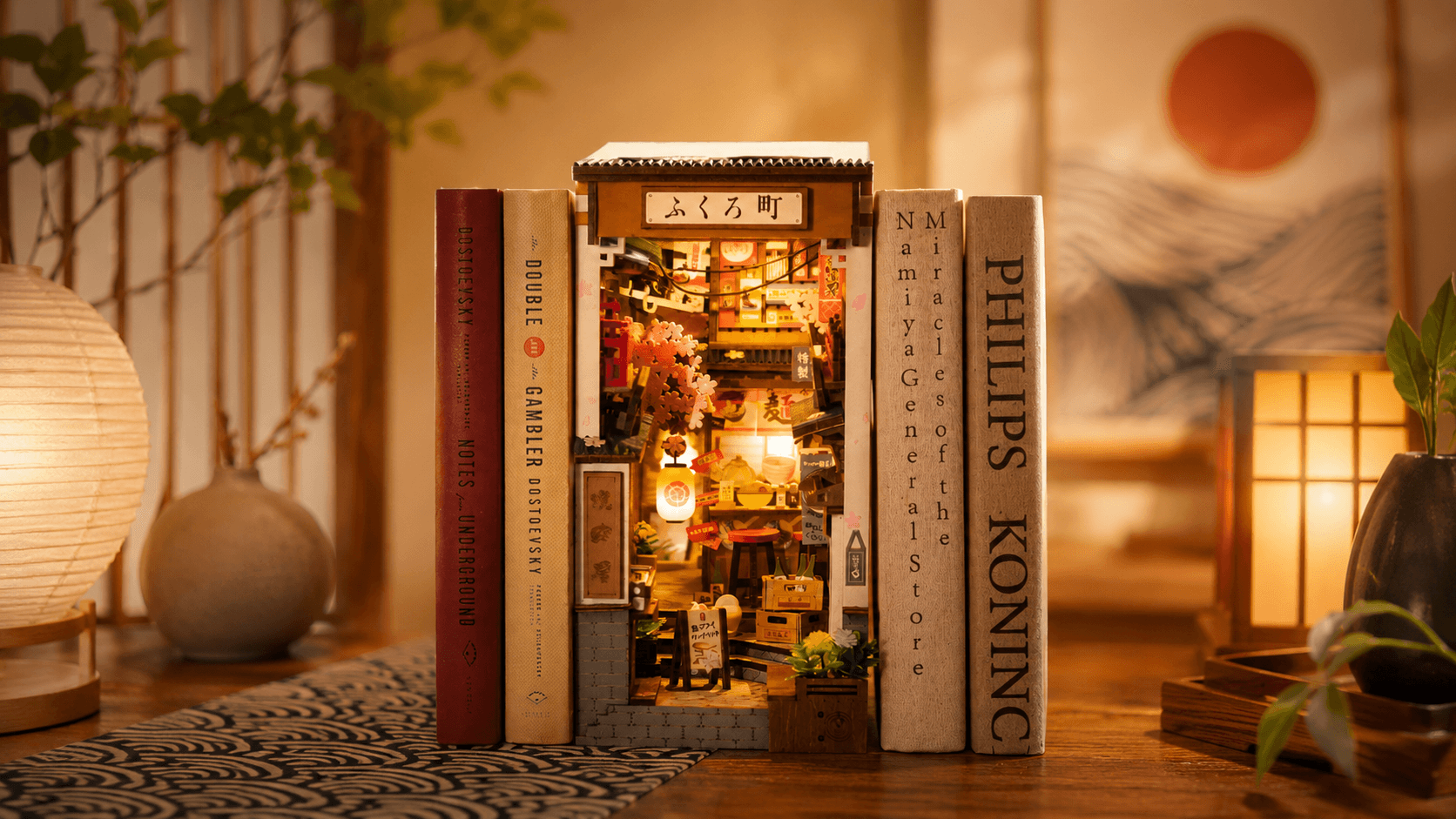
Sakura Wine Alley represents this idea through its compact izakaya storefront, signage, doorway, drink crates, and warm interior light.
How Do Ramen Shops Shape the Japanese Alley Scene?
A ramen shop offers a different rhythm from an izakaya.
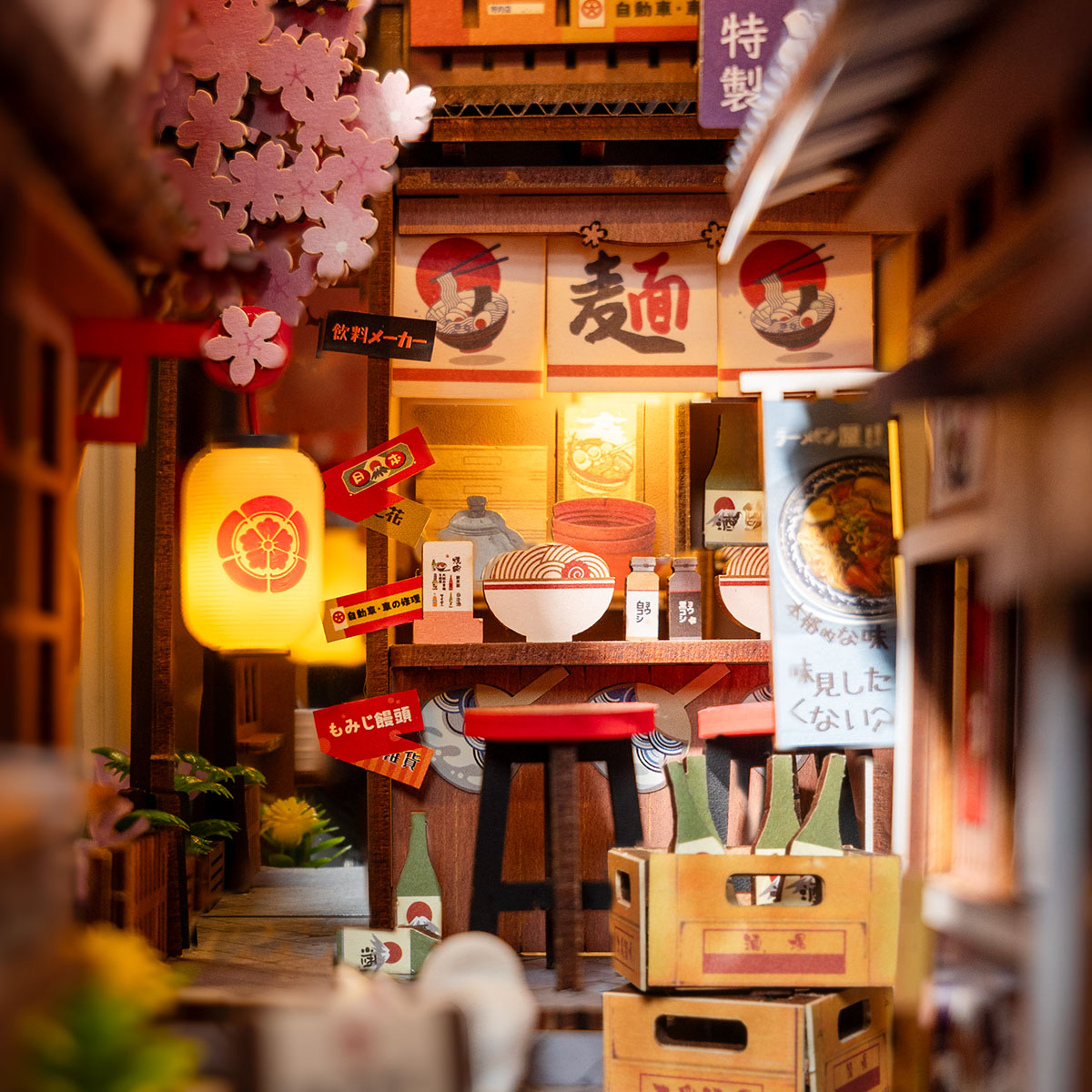
Instead of gathering around shared dishes, customers may sit at a counter and focus on a freshly prepared bowl of noodles. The space is often efficient and visually direct: stools face the counter, ingredients and condiments are within reach, and the preparation area becomes part of the scene.
Steam, bowls, curtains, signs, and red seating make ramen shops especially recognizable in miniature. Even without sound or aroma, these details suggest warmth and activity.
In Sakura Wine Alley, the ramen storefront helps establish the feeling of a small neighborhood food street rather than a single isolated restaurant.
Why Are Grilled Foods Connected With Alley Dining?
Grilled and skewered foods suit compact dining spaces because the cooking itself becomes part of the street atmosphere.
A small grill produces light, smoke, motion, and aroma. In a tightly arranged alley, people walking past can often see food being prepared. Yakitori and other skewered dishes are also commonly associated with casual izakaya menus and small specialty shops.
The grill house in Sakura Wine Alley adds another layer to the miniature street. Together with the ramen shop and izakaya, it creates the sense that the viewer is looking down a complete dining alley with several possible stops.
How Does Sakura Wine Alley Recreate This Culture in Miniature?
Sakura Wine Alley does not attempt to reproduce one exact Tokyo address. Instead, it combines recognizable elements of Japanese alley dining into a story-rich miniature scene.
Lantern-Like Evening Light
Warm lighting gives the alley its nighttime identity. It creates contrast between the narrow passage and the illuminated shops, making the scene feel active even when displayed on a quiet bookshelf.
Closely Arranged Storefronts
The ramen shop, grill house, and izakaya are placed close together. This compressed layout reflects the visual density that makes yokocho feel intimate and full of discoveries.
Signs, Curtains, and Counters
Small signs, entrance curtains, stools, counters, bowls, crates, and cooking details help distinguish the businesses. These objects also invite the builder to slow down and examine how the miniature street works.
A Sakura-Inspired Storybook Mood
The cherry blossom element adds a seasonal, romantic layer to the design. It is part of Sakura Wine Alley’s imaginative visual storytelling rather than a feature found in every Japanese food alley.
A View Designed for Display
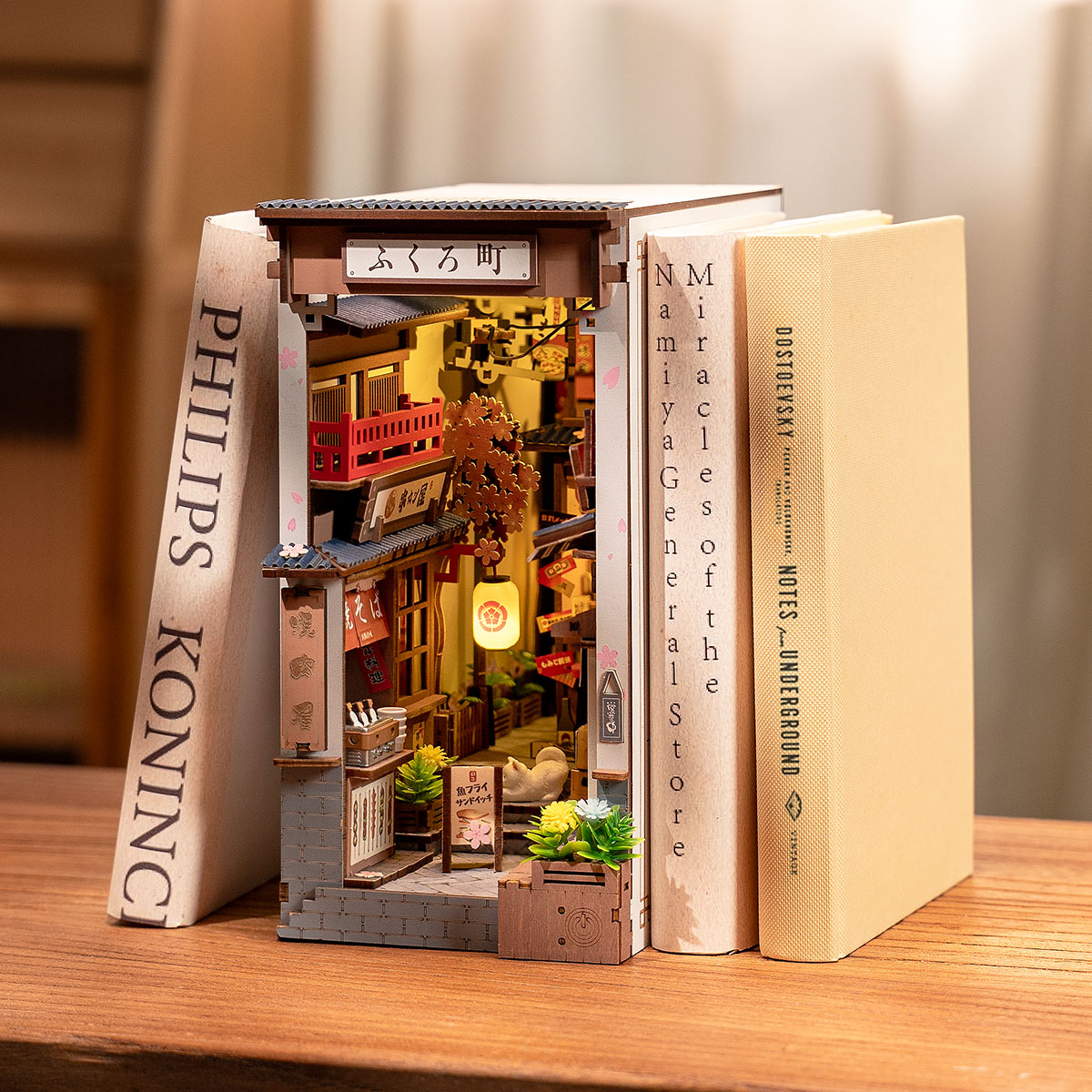
As a book nook, the completed scene frames the alley from a forward-facing viewpoint. Placed between books or on a shelf, it gives the impression of discovering a glowing side street hidden within the room.
What Can You Notice While Building the Scene?
Building the kit changes the way the scene is viewed.
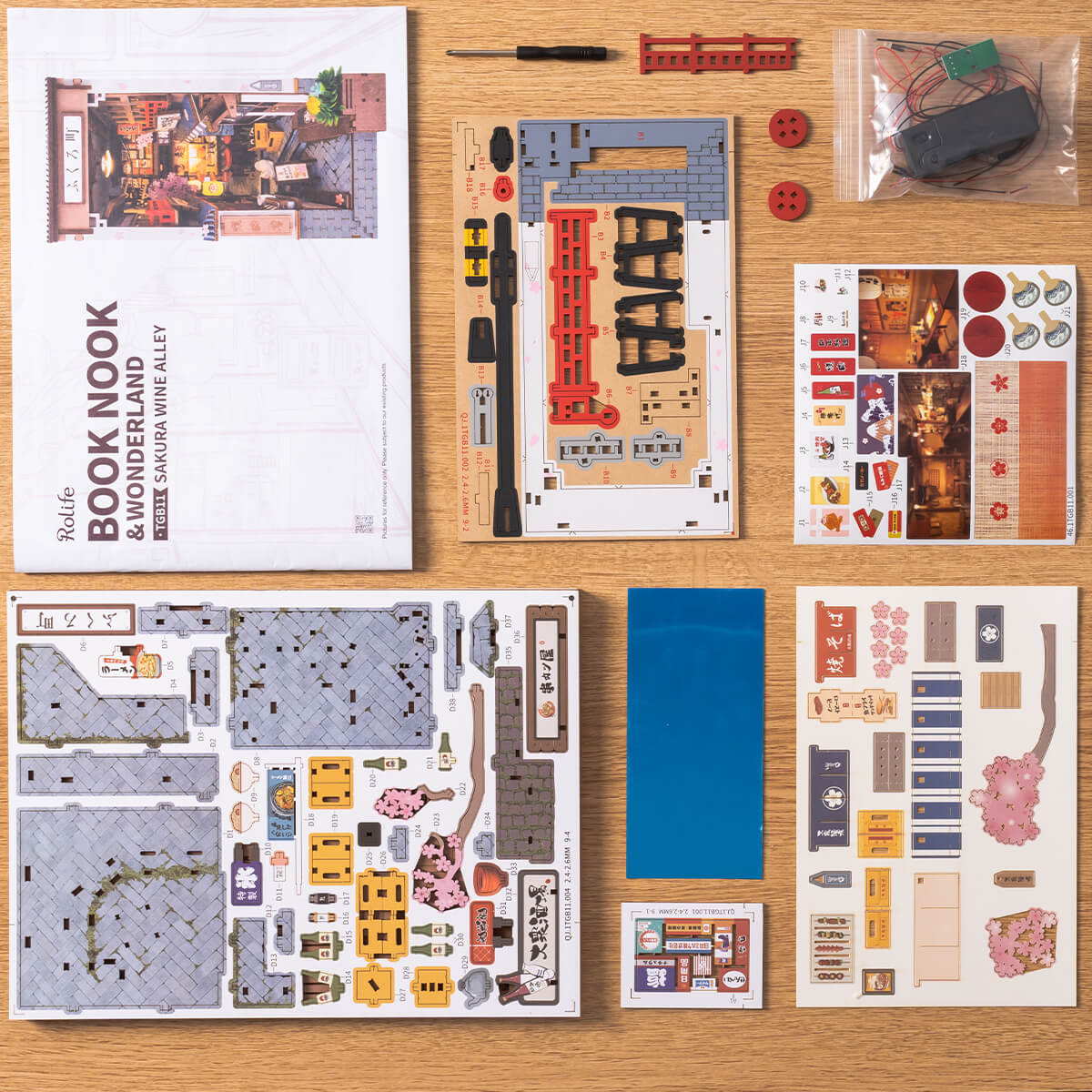
A finished display can be appreciated as one complete nighttime alley. During assembly, however, the builder encounters it piece by piece: the shop fronts, signs, food details, seating, lighting, and narrow pathway.
This makes Sakura Wine Alley more than a general Japanese-style decoration. Its individual parts help explain how visual details work together to create the feeling of an inhabited street.
Key Takeaway: Sakura Wine Alley connects Rolife with Japanese alley culture by turning ramen shops, izakaya, grilled food, lantern light, and close storefronts into a buildable miniature world.
Is Sakura Wine Alley Right for Your Shelf?
This scene may suit you if you enjoy:
- Japanese street and neighborhood scenes
- Ramen shops and izakaya-inspired details
- Warm, illuminated bookshelf decor
- Miniatures that tell a cultural or travel-inspired story
- DIY projects with many small visual elements
- Displays that can be viewed differently when the lights are on
It may be less suitable if you prefer a wide, open miniature room or a design without lighting and closely arranged details. The book nook format is intentionally narrow because it is designed to create depth between books or within a shelf display.
Frequently Asked Questions
Is Japanese street food limited to outdoor stalls?
No. Outdoor stalls, or yatai, are one part of Japanese street food culture. The broader experience can also include small ramen shops, grills, and casual eateries clustered along yokocho alleyways.
What does “yokocho” mean?
Yokocho literally refers to an alley or side street. In modern travel and dining contexts, it often describes a narrow lane containing small izakaya, bars, and restaurants.
What is the difference between an izakaya and a ramen shop?
An izakaya is a casual social dining space serving drinks and a variety of small dishes. A ramen shop specializes primarily in bowls of ramen and often has counter-style seating. Both may be found within the same food alley.
Is Sakura Wine Alley based on one real location?
The kit is better understood as an imaginative recreation of Japanese alley dining culture rather than a scale model of one documented street. It combines recognizable details from ramen shops, grill houses, izakaya, and lantern-lit night scenes.
What kind of miniature is Sakura Wine Alley?
Sakura Wine Alley is a DIY book nook kit designed to create a narrow, illuminated street scene for a bookshelf or display shelf.
Bring a Japanese Night Street to Your Bookshelf
The appeal of a Japanese food alley comes from more than any individual dish. It lies in the warm light above a doorway, the closeness of the shops, the promise of a hot meal, and the feeling that every entrance holds a different story.
Sakura Wine Alley turns those elements into a miniature scene you can assemble, observe, and display. Explore the Rolife Sakura Wine Alley DIY Book Nook Kit and create your own view into a lantern-lit Japanese night street.
Comment