


Best Screen-Free Hobbies for Adults Who Want to Stop Scrolling
May 10,2026 | Rolife Team

Quick Answer
The best screen-free hobby is one that is easy to begin when your energy is low, keeps your hands or attention occupied, and can be paused without creating a mess. For many adults, drawing, needlework, puzzles, miniature building, cooking, gardening, walking, or reading can work better than simply trying to use more willpower. Start with the situation in which you usually scroll, then choose an activity that fits that moment.
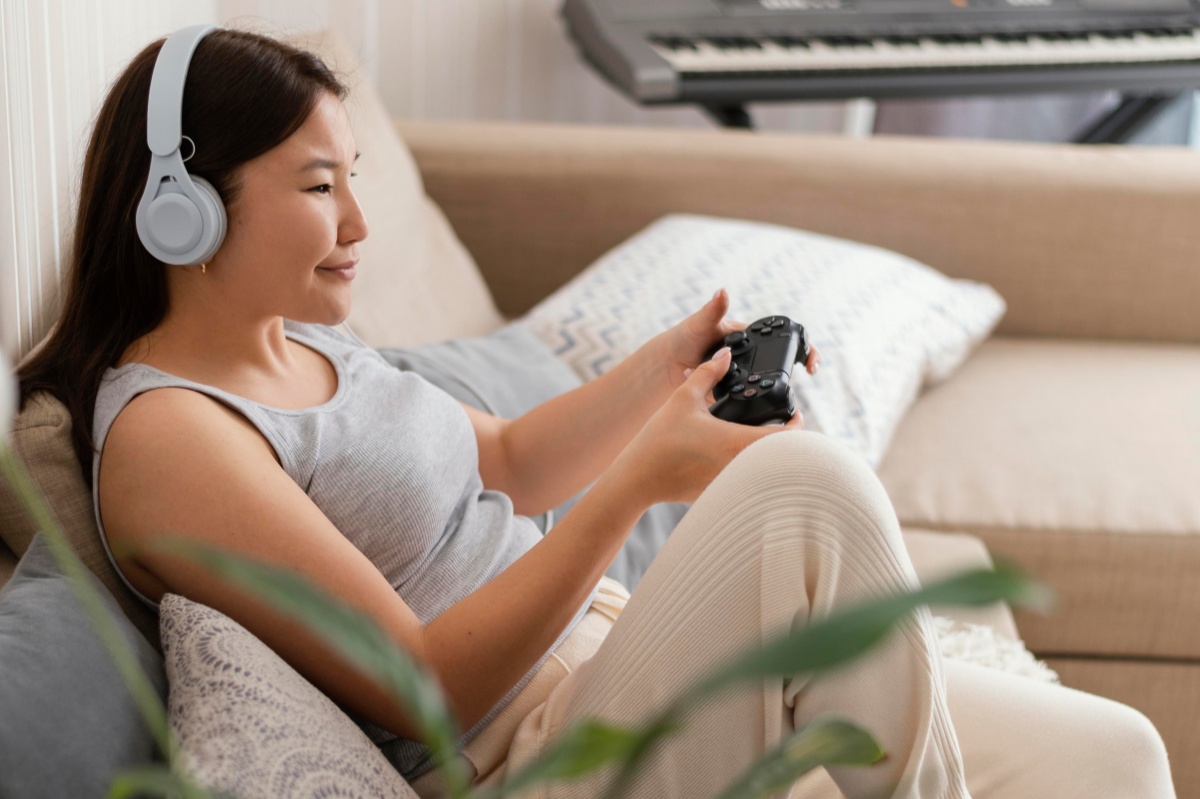
Most people do not reach for their phone because they carefully chose it as the best use of the evening. The phone is simply close, easy, and ready before anything else. A screen-free hobby has a better chance of replacing that habit when it is just as easy to start.
That means the right question is not, “What is the most impressive hobby?” It is, “What will I realistically pick up when I am tired, bored, or waiting for dinner to finish?”
Which Screen-Free Hobby Fits Your Real Life?
| Your situation | Try first | Why it can work | Watch for |
|---|---|---|---|
| Low energy after work | Coloring, a puzzle book, simple stitching | Low decision load and visible progress | An overly complex pattern can feel like another task |
| You need your hands busy | Knitting, model building, miniature kits | Both hands stay involved, so checking the phone is less automatic | Small parts, setup, and storage may add friction |
| You only have 10-20 minutes | Sketching, journaling, plant care | Easy to stop after one small unit | Keep materials visible or you may not start |
| You want to move | Walking, gardening, relaxed cooking | Changing location interrupts the usual scrolling cue | Weather, cleanup, or preparation can become barriers |
| You want shared time | A tabletop game, shared craft, or recipe | Creates conversation and a common goal | It depends on another person's schedule and interest |
What Makes a Hobby More Likely to Replace Scrolling?
1. It is easier to start than opening another app
A hobby with a long setup process will struggle to compete with a phone that is already in your hand. Leave a sketchbook on the coffee table, keep a puzzle tray ready, or store the current craft project in one box so you can begin without reorganizing the room.
2. It gives you a small, visible unit of progress
One colored section, one row of stitches, one miniature chair, one puzzle corner, or one repotted plant is enough for a short session. A useful hobby does not require you to finish the whole project before the evening feels worthwhile.
3. It can be paused cleanly
After-work energy is unpredictable. Activities that can stop at a natural checkpoint are often easier to return to than projects that require a large uninterrupted block of time.
4. It matches the reason you scroll
If you scroll because you are tired, choose something gentle and repetitive. If you are restless, try movement or cooking. If you want stimulation, a detailed puzzle or model may fit better. If you want company, choose a hobby that can be shared rather than forcing a solitary activity.
Key Takeaway: Choose for your lowest-energy realistic evening, not your most ambitious imaginary weekend.
The Best Screen-Free Hobbies for Adults
Coloring and low-pressure drawing
Coloring gives you structure without asking you to invent a subject. Doodling and simple sketch prompts offer more freedom, but they still need little equipment. Keep one notebook and a small set of pencils where you normally sit with your phone.
Knitting, crochet, embroidery, and cross-stitch
These are strong options when you want repetitive hand movement and a project that grows a little at a time. Begin with a forgiving pattern and inexpensive materials. A first project with too many colors, tools, or unfamiliar stitches can create the same avoidance you were trying to escape.
Puzzle books, jigsaws, and wooden puzzles
Puzzles provide a clear problem and a visible finish line. A crossword or number puzzle is portable, while a jigsaw or three-dimensional wooden puzzle can turn a table into an ongoing project. Choose the format according to the space you can leave available.
Miniature kits and book nooks
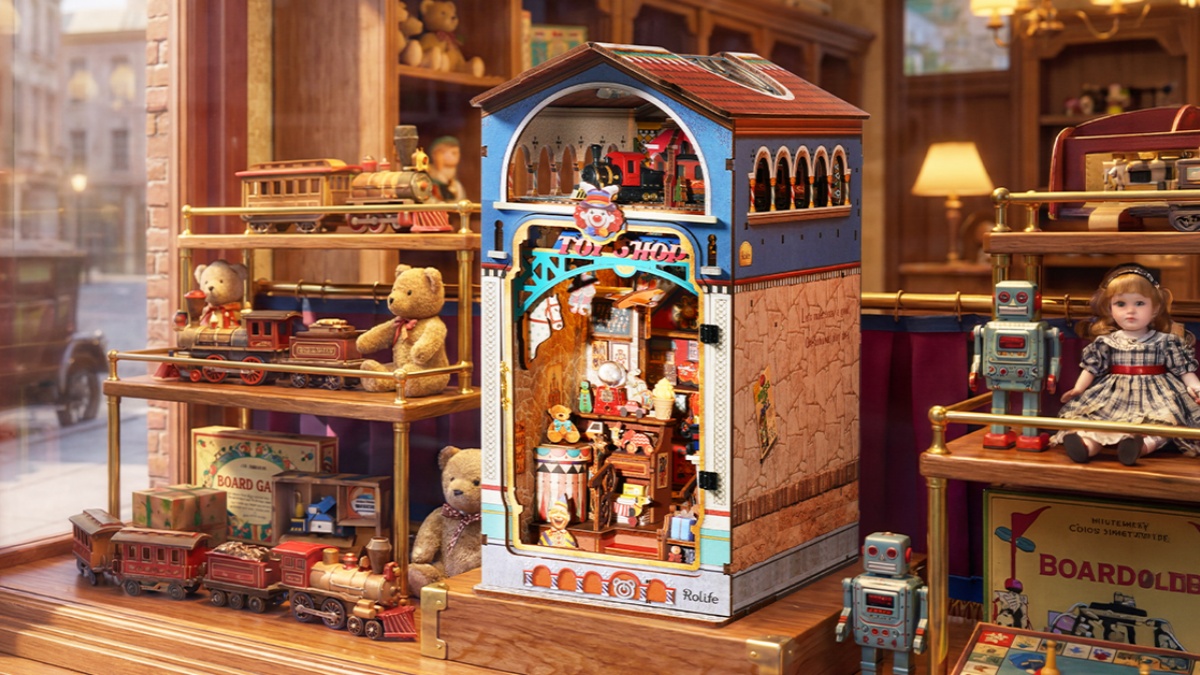
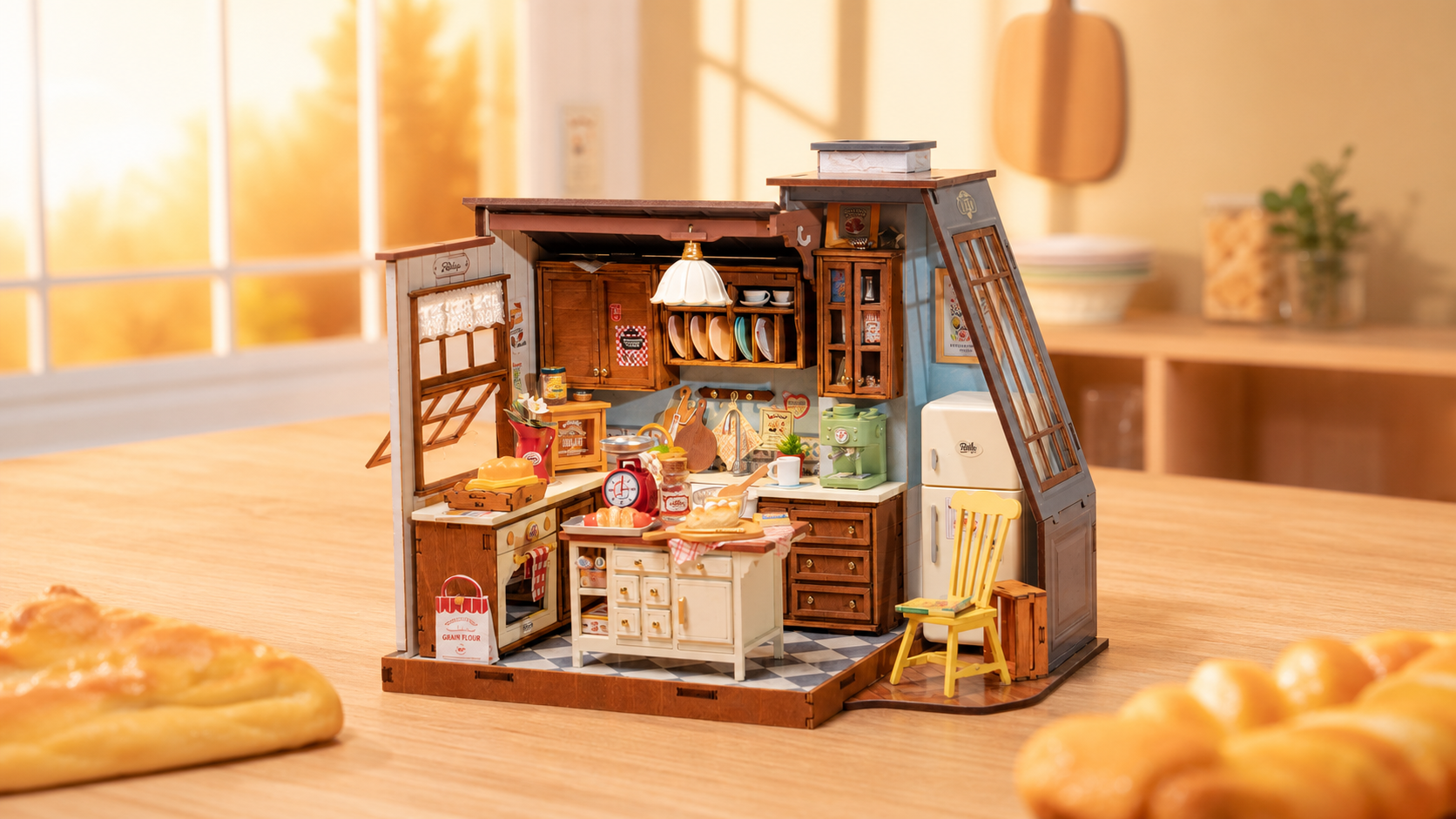
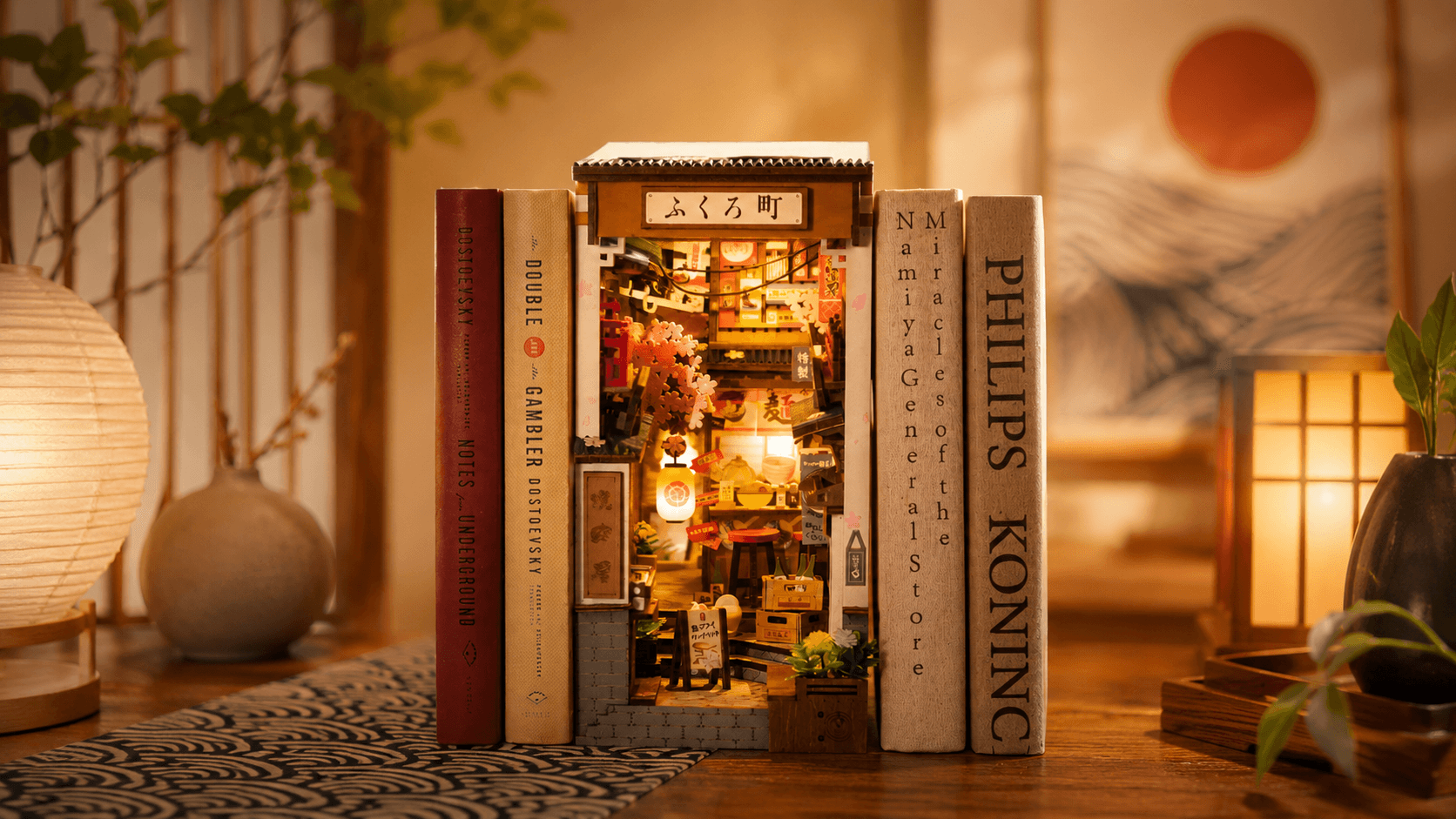
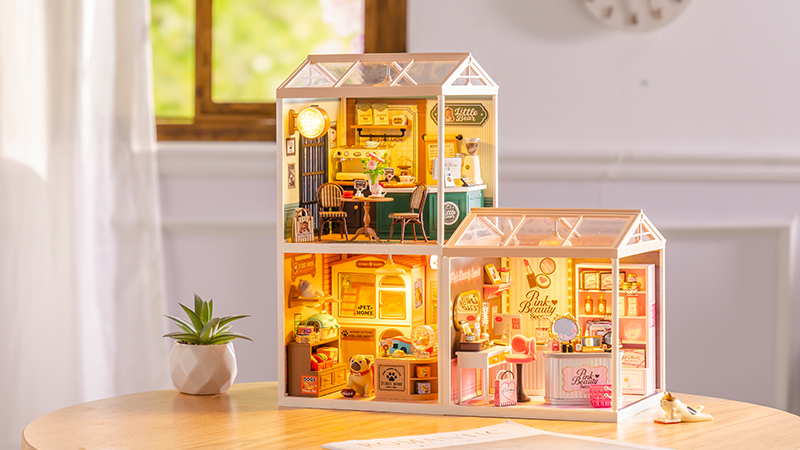
Miniature building works well for adults who like sorting, assembling, and watching a scene take shape. It combines a guided process with a finished object you can display. Because the project is made of many small steps, you can often stop after completing one piece or one section.
It is not automatically relaxing for everyone. Tiny decorations, paper cutting, glue, wiring, or searching for parts can feel satisfying to one person and fiddly to another. Before choosing a kit, think about your tolerance for detail, your workspace, and whether you want a short modular build or a slower traditional project.
Cooking or baking for pleasure
Cooking can be a screen-free hobby when it is separate from the pressure of getting dinner on the table. Try one bread, dessert, sauce, or weekend recipe rather than turning every meal into a challenge. Printing or writing down the recipe also prevents a quick ingredient check from becoming another scroll.
Gardening and plant care
Plant care offers short, concrete tasks: watering, pruning, repotting, checking new growth, or starting herbs. It can suit people who want gentle movement and a reason to leave the usual scrolling spot.
Reading and journaling
Reading is easy to recommend but not always easy when you are exhausted. Short stories, essays, comics, or a familiar favorite may be more approachable than a demanding book. Journaling can be equally light: a few lines about the day, a list, or one question is enough.
Walking and other simple movement
A walk changes both your activity and your environment. It is especially useful when sitting still makes you reach for your phone automatically. Keep the goal small: one block, ten minutes outside, or a short route after dinner.
What Hobbyists Consistently Mention About Replacing Phone Time
In a Reddit discussion about at-home hobbies that genuinely help people unwind, recurring suggestions included miniature building, book nooks, diamond painting, embroidery, crochet, needle felting, and puzzles. The shared appeal was not productivity. It was having something low-pressure to do with the hands while still seeing a result.
Several participants also described pairing a hand-based activity with an audiobook, podcast, music, or a familiar television show. That approach can work when the goal is to stop active scrolling rather than remove every form of media.
The same discussion also highlighted the limits. Complicated cutting, searching for pieces, managing too many materials, and storing a growing collection can turn a hobby into extra work. These are qualitative experiences from individual hobbyists, not a promise that one activity will feel relaxing to everyone.
Real Screen-Free Moments From the Rolife Community
Screen-free hobbies become much easier to stick with when they create something screens often cannot: real connection, focused attention, and shared memories.
Rolife Community maker Rochelle_R shared that crafting miniature kits became one of the most positive changes in her family life. What started as a simple activity turned into meaningful screen-free time with her daughter. Together, they slow down, build tiny spaces, handle small challenges, and celebrate the proud “we did it” moments.
For Rochelle_R, the value of miniature kits goes beyond the finished model. The building process created shared goals, real conversations, and a stronger sense of connection. In creating miniature worlds together, they also strengthened something much bigger: their bond.
This is one reason a shared miniature project can work as screen-free time for adults and families. It does not only move attention away from a phone; it gives that attention somewhere specific to go: creativity, patience, conversation, and the satisfaction of making something together.
This Rolife Community story describes an adult-led family activity. It is not an age recommendation for every miniature kit; always follow the guidance for the specific product and supervise children appropriately.
Are Miniature Kits Relaxing or Stressful?
They can be either. Miniature building is more likely to feel relaxing when you enjoy detailed handwork, like following a sequence, and do not mind leaving a project unfinished between sessions.
A miniature kit may suit you if:
- you want a structured activity rather than a blank creative page;
- you enjoy visible progress and small completed steps;
- you have a stable tray, desk, or table for parts;
- you like the idea of displaying the finished scene.
It may not be your best screen-free hobby if:
- tiny pieces and detailed instructions make you impatient;
- you dislike glue, paper cutting, wiring, or organizing components;
- you need an activity that fits in a pocket or can be packed away instantly;
- an unfinished project feels like an obligation rather than something to return to.
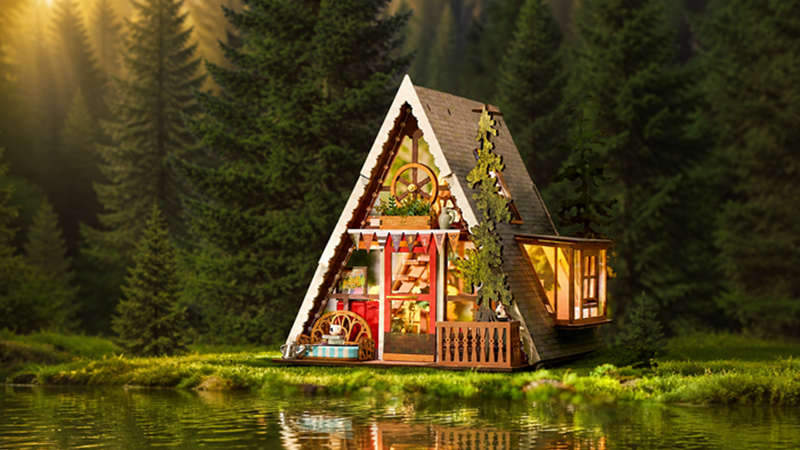
If you are new to the category, use the beginner Rolife kit guide to compare build styles before choosing. A modular Super Creator room, a Book Nook shelf scene, a traditional DIY miniature house, and a 3D wooden puzzle offer very different kinds of handwork.
Two practical questions matter before buying: how long a Rolife kit may take and whether the kit requires glue. Check the information for the specific model rather than assuming every product line is assembled in the same way.
Rolife Kits That Feel Especially Good When You Want a Break from Screens
Different projects suit different kinds of attention. The four kits below remain useful examples because they range from a detailed miniature library and a bookshelf scene to a flower shop and a structured wooden puzzle. Choose by the kind of process you enjoy, not by the assumption that every kit will feel relaxing to everyone.
Sam’s Study DIY Miniature House
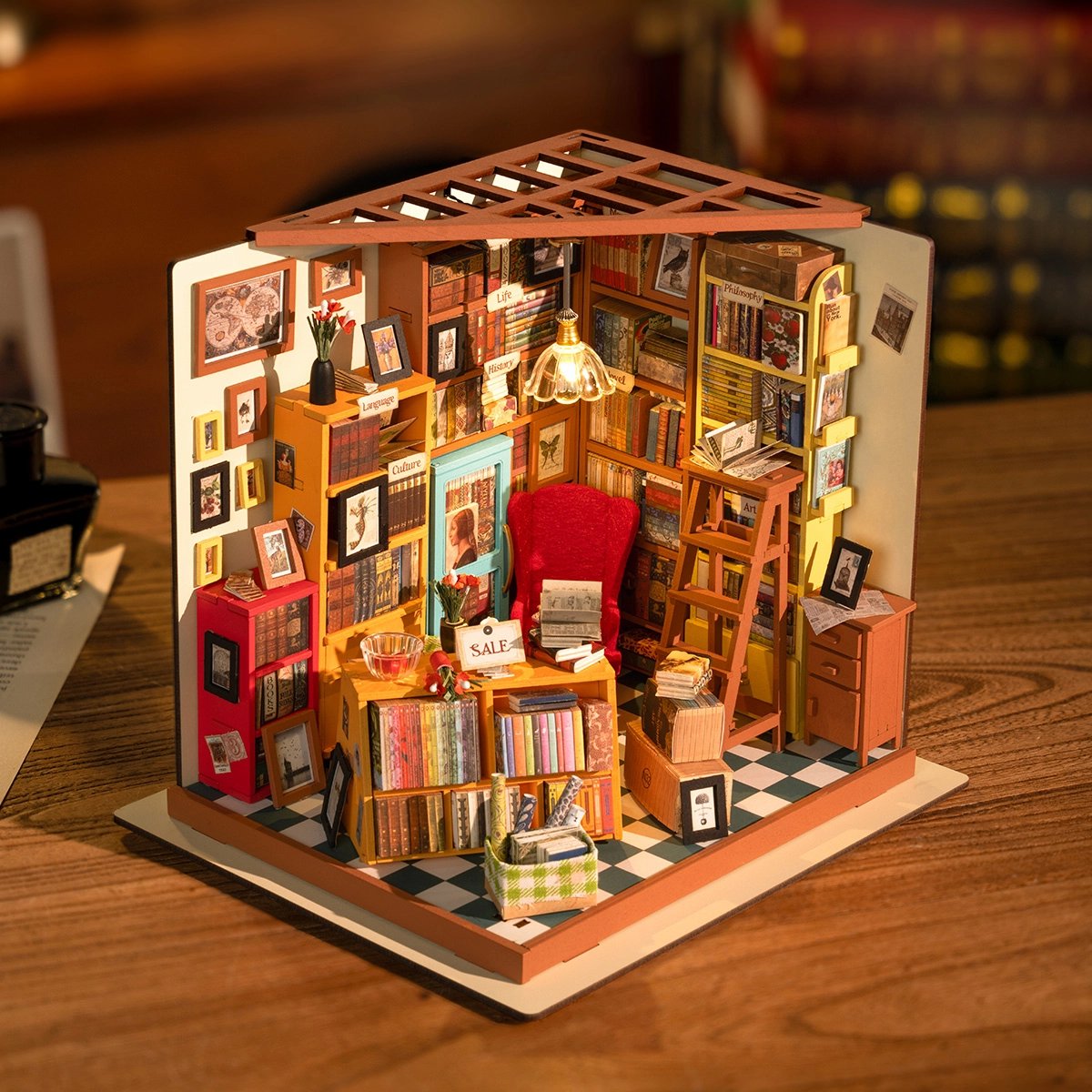
Sam’s Study has the atmosphere of an unhurried afternoon: warm lighting, bookshelves, a wooden desk, and the feeling of settling into a private reading room. The detailed library setting invites a slower build rather than a race to finish.
Why it works for screen-free time:
- The library scene gives book lovers a familiar theme to focus on.
- Small sections create visible progress throughout a longer project.
- The finished study can become part of a bookshelf, desk, or reading-corner display.
Best for: book lovers and adults who enjoy calm, detail-oriented crafting.
Session idea: work for 30–60 minutes when the current assembly step allows a clean stopping point.
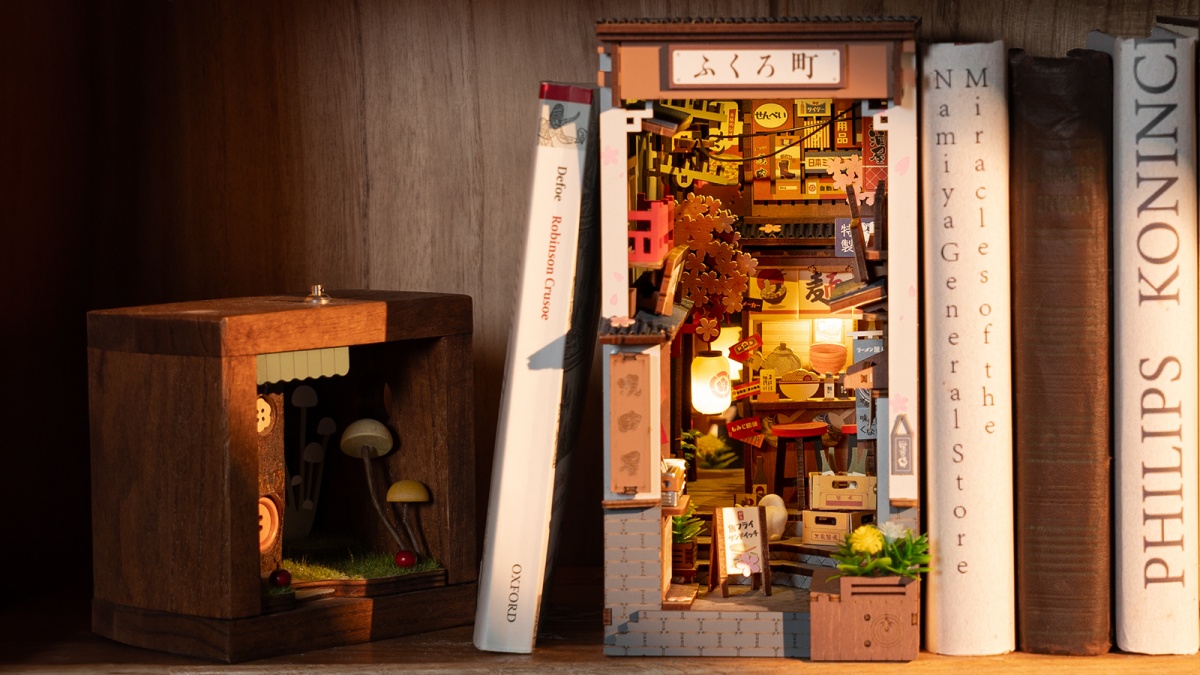
Sakura Densya
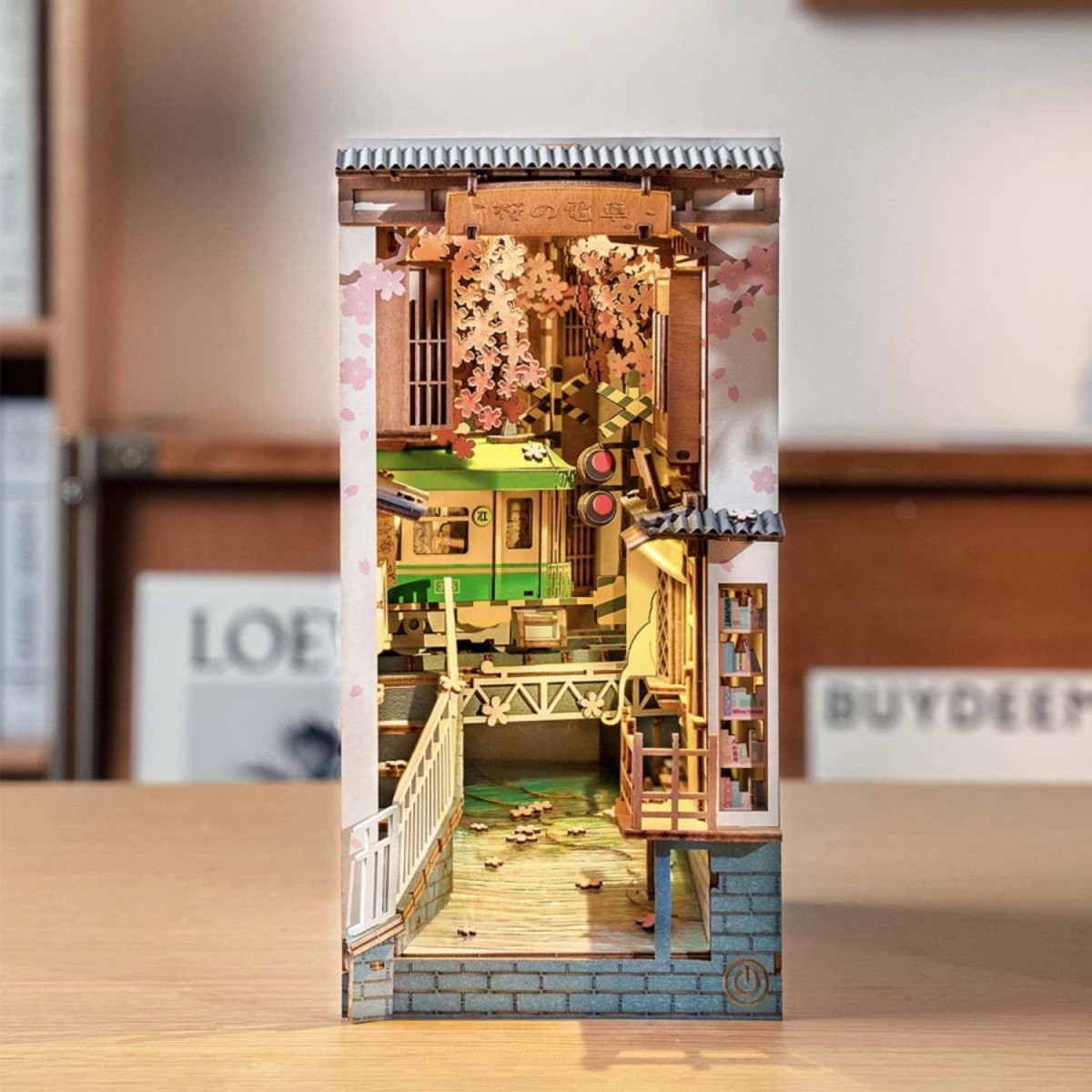
Sakura Densya builds a quiet Japanese street scene with cherry blossoms and a train passing through it. The narrow Book Nook format turns the completed project into a scene designed for bookshelf display.
Why it works for screen-free time:
- The scene changes visibly as the foreground, buildings, and railway details come together.
- Completing one small component can provide a natural checkpoint.
- The finished piece connects the building experience with bookshelf decor.
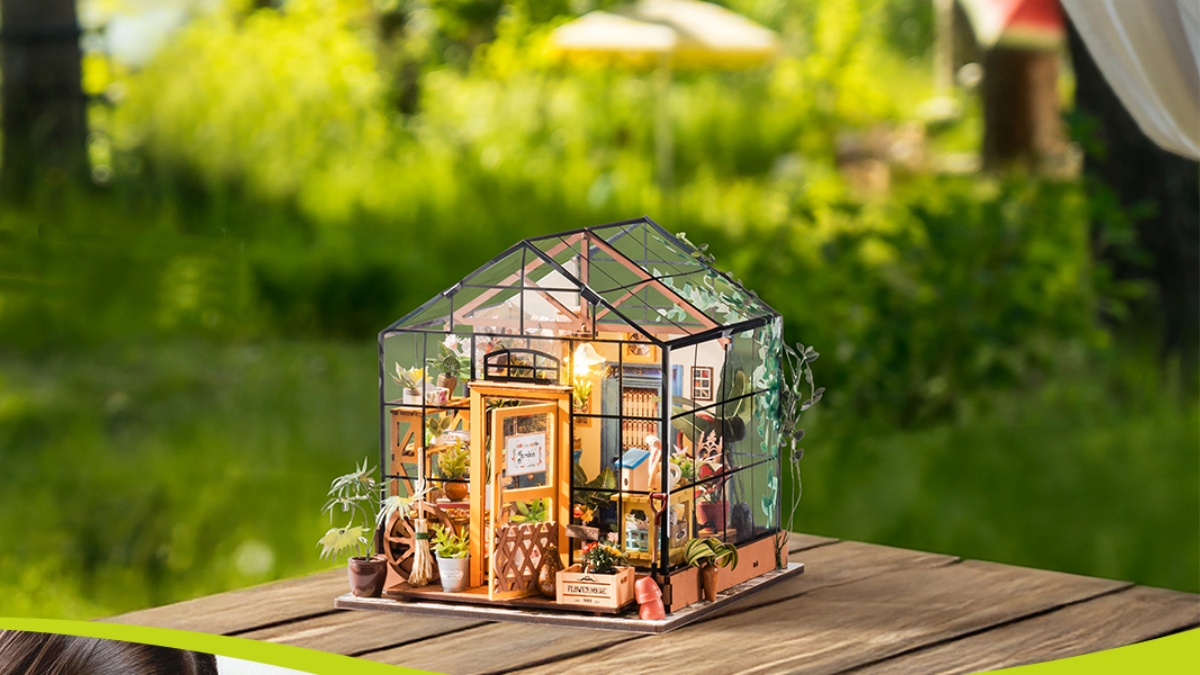
Emily’s Flower Shop Miniature House
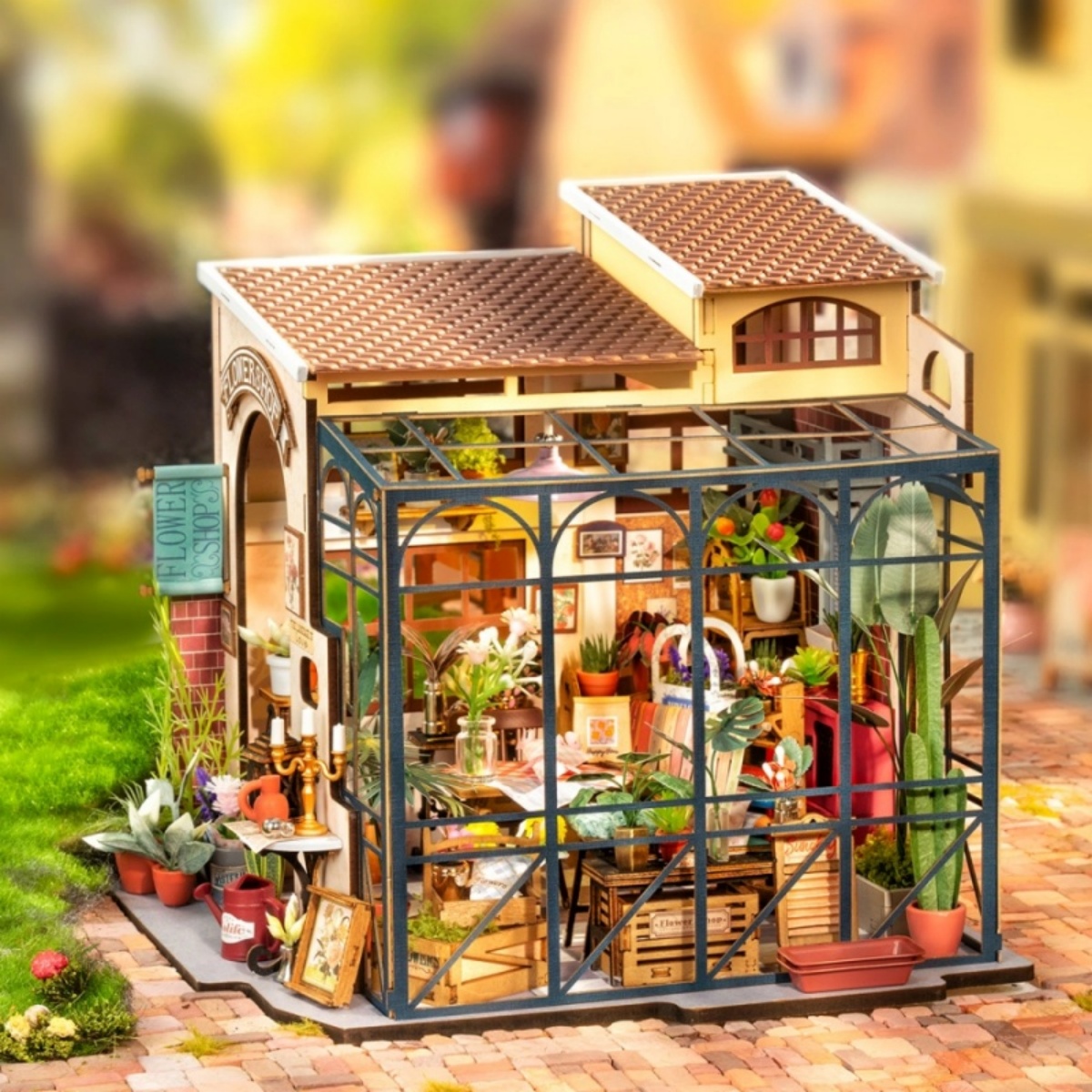
Emily’s Flower Shop is bright, floral, and filled with small decorative details. It suits makers who enjoy arranging a cheerful shop scene and returning to repeated detail work over several sessions.
Why it can suit a slower creative break:
- The flower-shop theme offers many small sections to complete one at a time.
- Repeated decorative work can feel absorbing for people who enjoy fine details.
- The finished shop becomes a colorful display piece as well as a completed craft.
Steam Journey
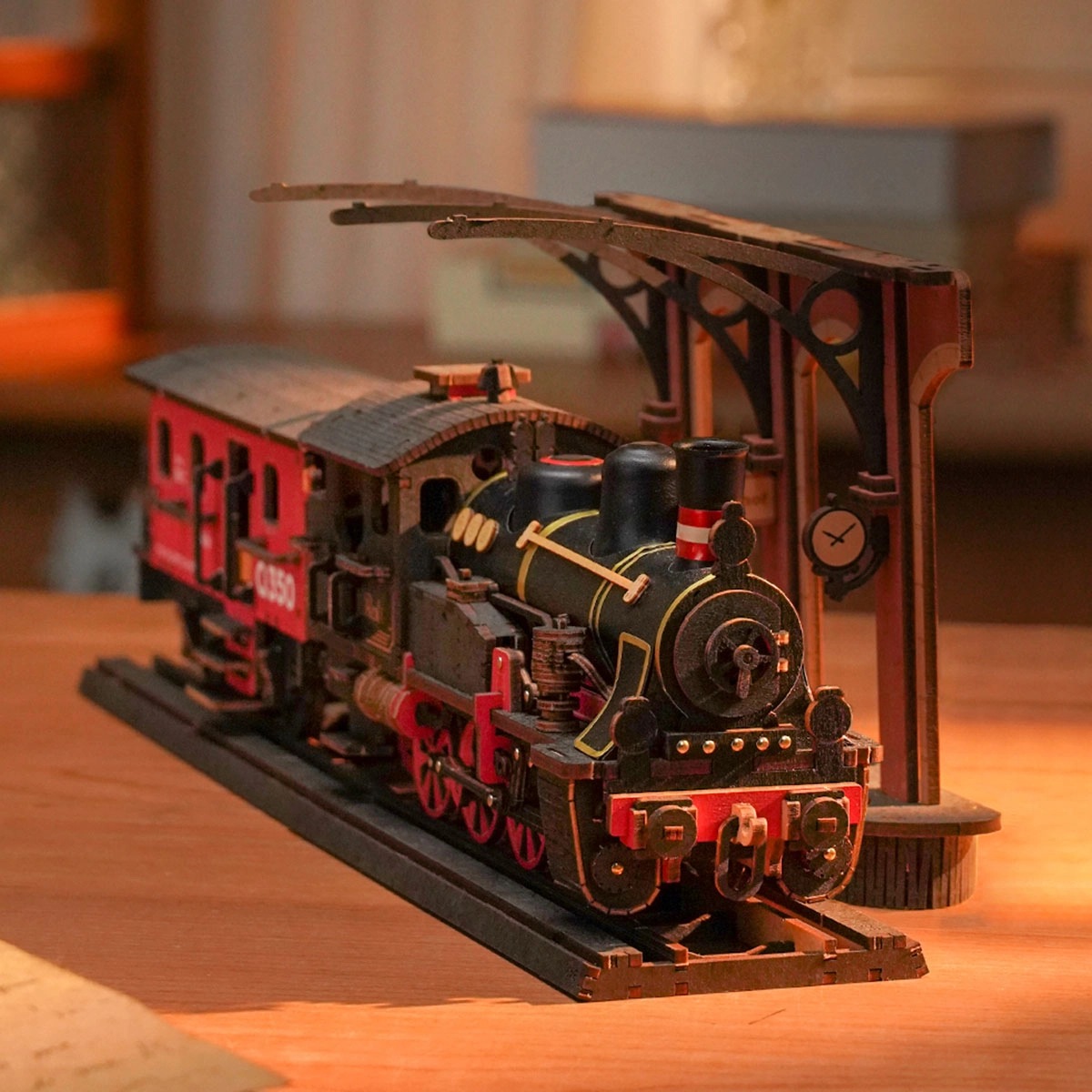
Steam Journey offers a more systematic building experience. Instead of decorating a room scene, you assemble a mechanical-looking wooden train through a defined sequence of parts.
Why it stands out:
- The structured process suits people who prefer assembly and problem-solving to decorating.
- Visible stages make it easier to notice progress as the train takes shape.
- The finished model provides a tangible result after the screen-free building time.
How Do You Make a Screen-Free Hobby Easier Than Your Phone?
- Prepare the first step in advance. Open the sketchbook, sort the current puzzle pieces, or place the next craft component on your tray.
- Use a small starting rule. Commit to ten or fifteen minutes, then decide whether to continue.
- Move the phone away from the activity. Charging it across the room is more reliable than placing it beside your supplies.
- Create a stopping point. Photograph your progress if useful, cover the project, and leave the next step obvious.
- Keep one active project. Buying supplies can easily become another form of browsing, so finish or pause deliberately before adding more.
What If You Want Relaxation More Than a New Skill?
Do not choose a hobby only because it looks impressive online. A lower-pressure activity may be more useful than a difficult project you admire but never start. If your main goal is to unwind at home, compare more options in our guide to relaxing hobbies for adults and choose the activity that fits your energy, space, and patience.
Frequently Asked Questions
What hobby is best for replacing phone scrolling?
A hobby that is easy to start, occupies your hands or attention, and offers a small unit of progress is usually the strongest candidate. Drawing, needlework, puzzles, miniature building, cooking, and walking can all work; the best choice depends on why and when you scroll.
What are good low-energy screen-free hobbies at home?
Try coloring, cross-stitch, a puzzle book, simple journaling, reading something short, or sorting and completing one small part of an ongoing craft. Keep the materials close to where you normally rest.
Can a miniature kit be completed in short sessions?
Many builders divide a project into sections, but the practical stopping points depend on the model and the step you are completing. Keep pieces organized and avoid stopping halfway through glue, paint, or wiring work that needs immediate attention.
Do audiobooks or podcasts still count as screen-free time?
They can, if your personal goal is to stop active scrolling rather than avoid every device. Start the audio, place the phone out of reach, and let the hands-on activity remain the main focus.
How long should I try a hobby before deciding it is not for me?
Give it several short sessions rather than judging it during one tired evening. If the setup consistently feels heavier than the activity itself, simplify the project or try a different format.
Choose Something You Can Reach for Tonight
Reducing scrolling does not need to begin with a dramatic digital detox. Put one realistic alternative within reach, prepare the first step, and try it for a short session. The goal is not to become exceptionally productive. It is to give your attention somewhere more satisfying to go.
Comment